

Initiative
Oona
Oona is a research technology platform for women’s health, community health and global health research.
The challenge
Mixed-methods community research is essential to understanding how health and medicine actually play out at the grassroots — especially in underserved areas like women’s health. It can involve vast surveys, datasets, transcriptions and experiments.
Research teams must often juggle all of that with very little infrastructure behind them. It is hardest in exactly the settings the research serves: intermittent connectivity, multiple languages, sensitive health information, distributed field teams and long follow-up.
Oona exists to take that weight off the people doing the work — to accelerate community-based research and to foreground women’s and community health research. It is tailored to grassroots needs, and provides a suite of tools that can interface with the data reporting systems and records already in place.
From the platform
All data shown is sample data.
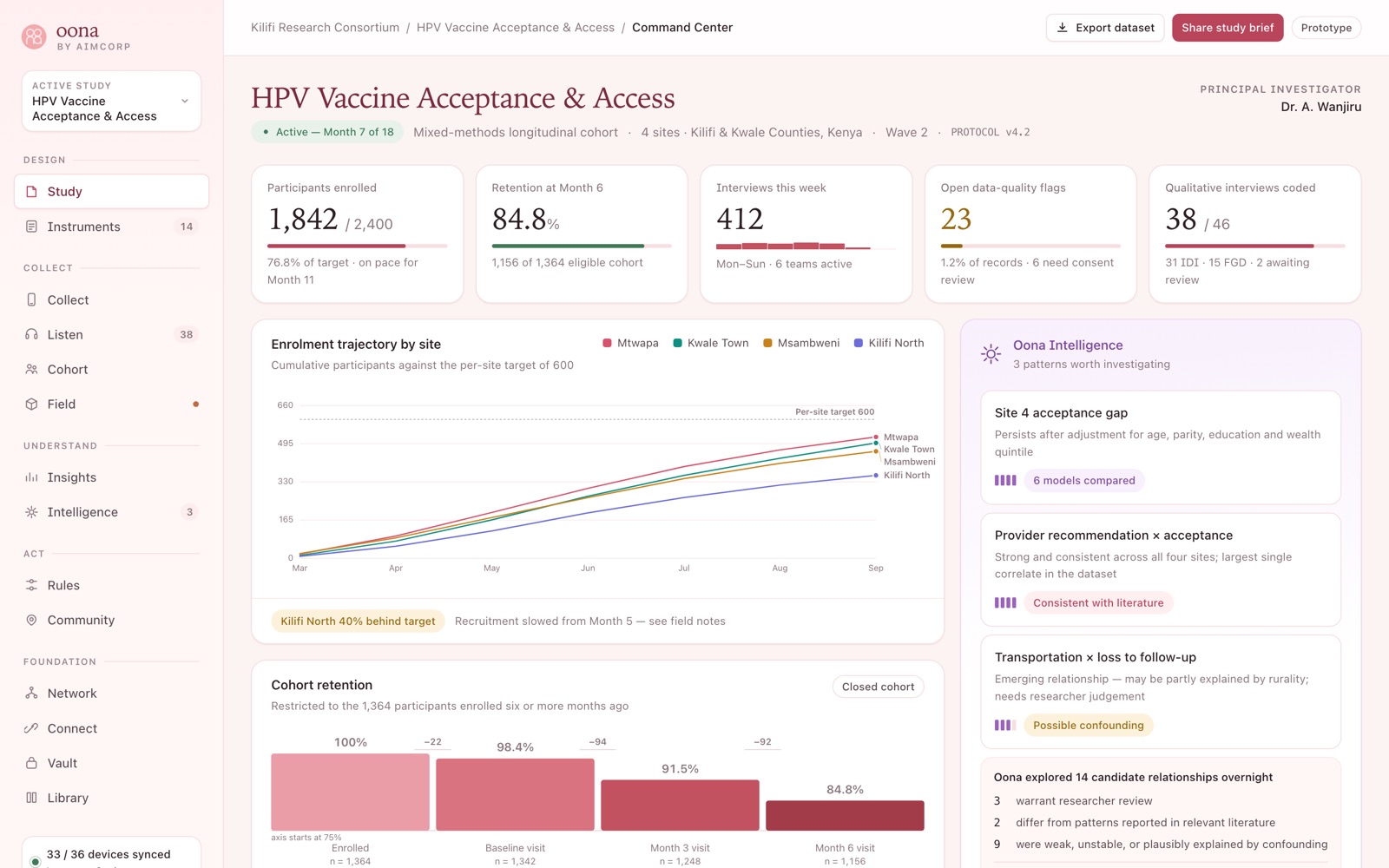
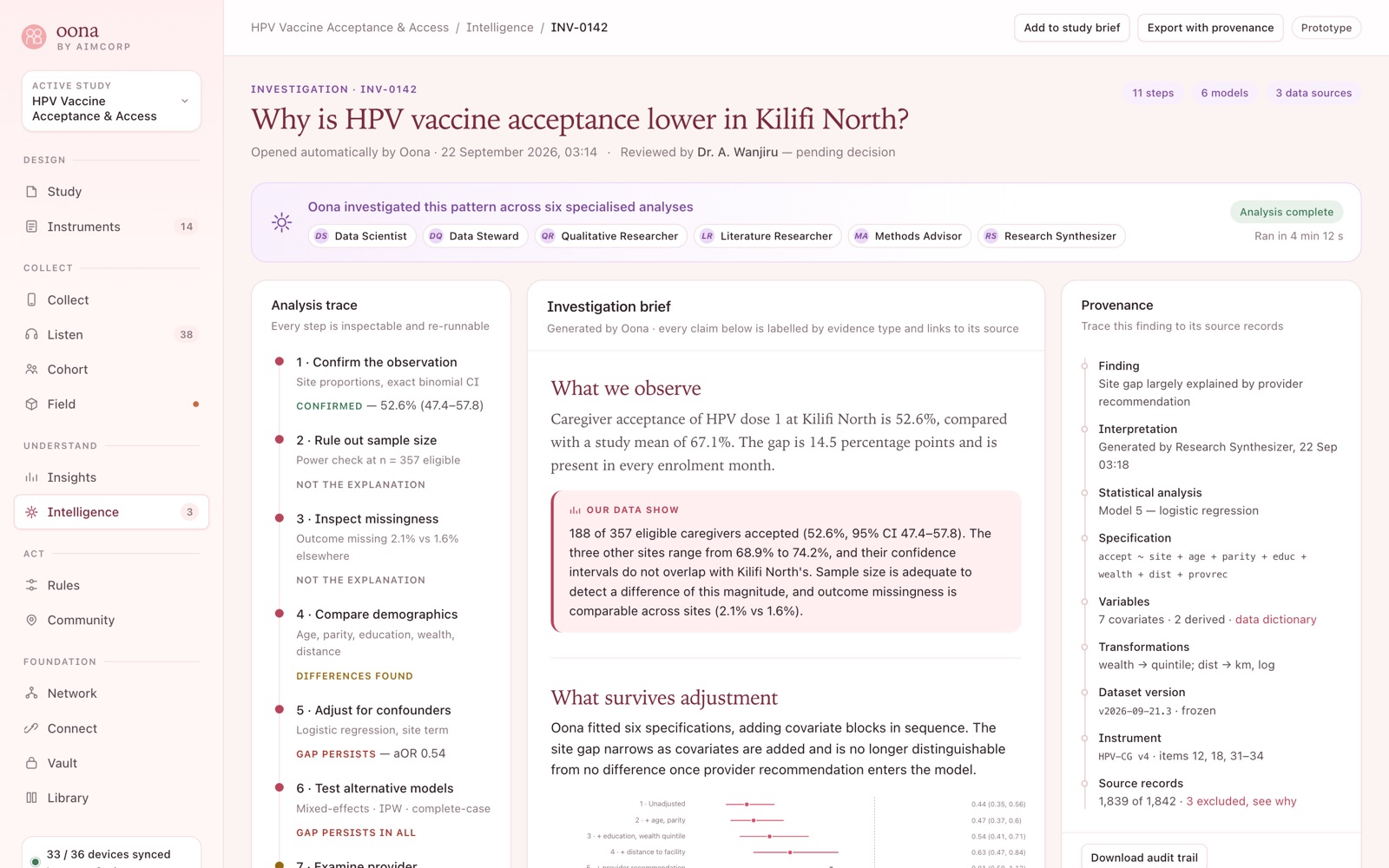
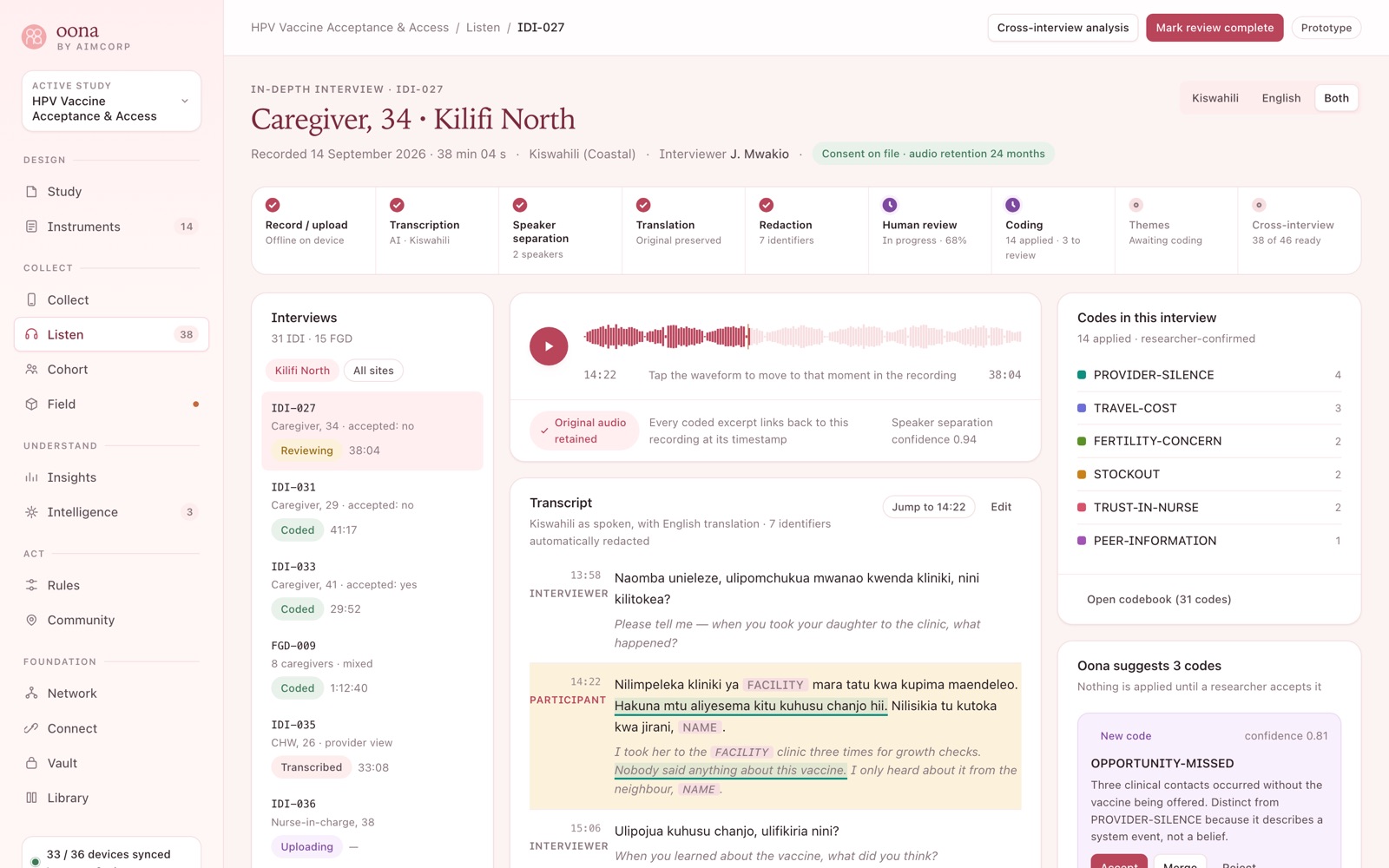
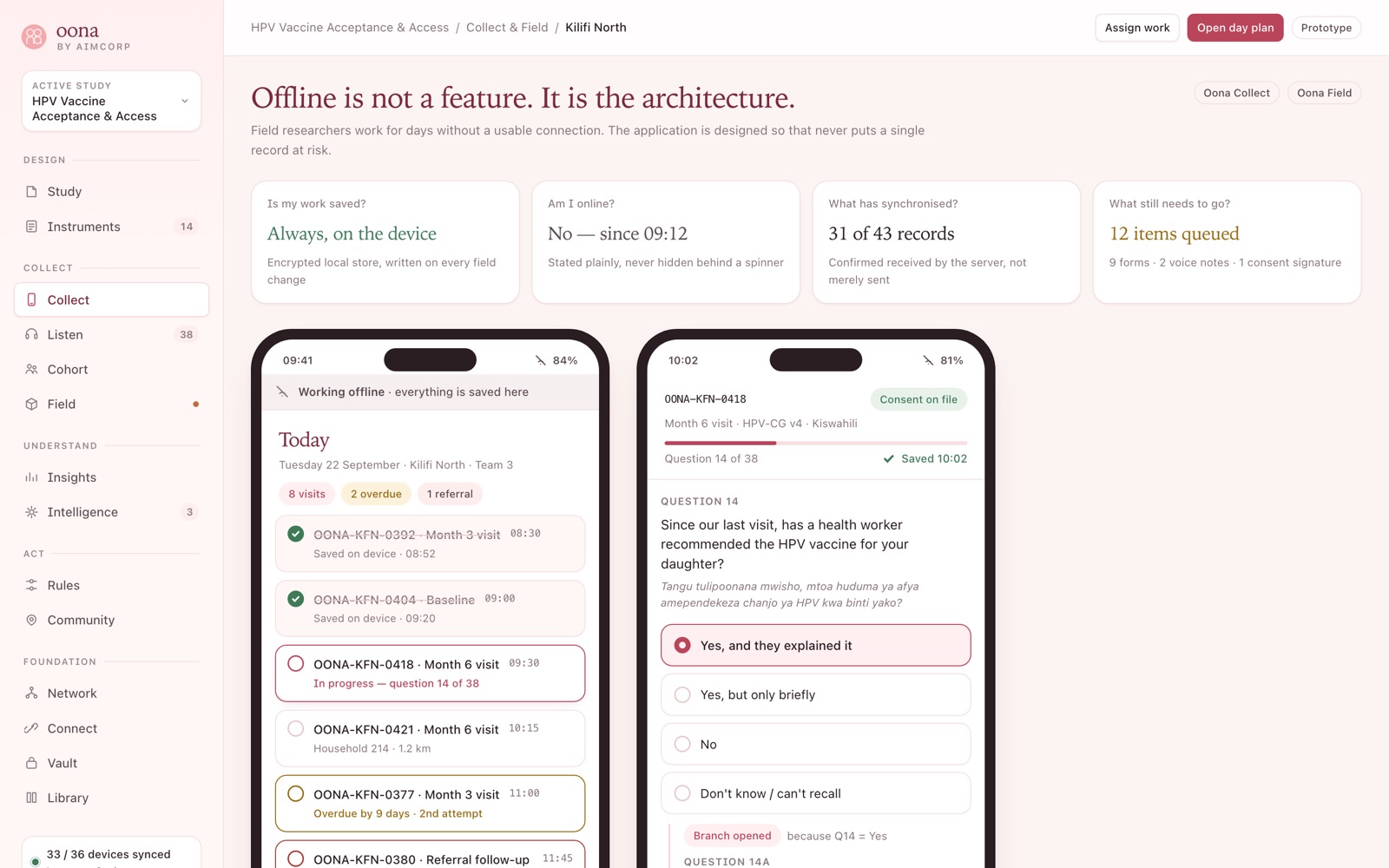
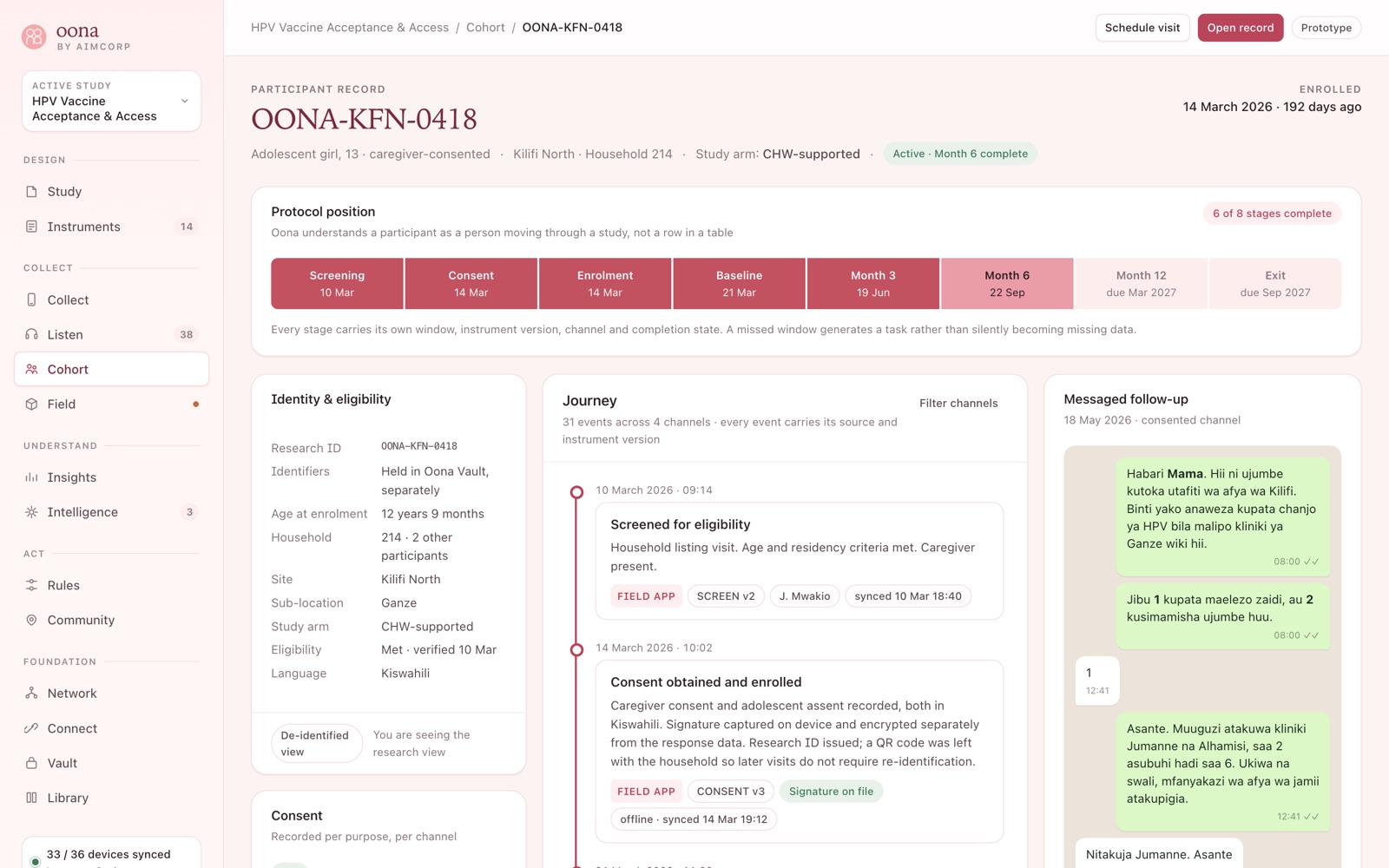
What we’re building
Oona is organised as one research lifecycle — design, collect, connect, understand, act — rather than a set of separate tools bolted together. The capabilities below are the suite that lifecycle is built from.
Study
Research design and study management: protocols, sites, eligibility, instruments, consent workflows and multilingual, versioned data dictionaries.
Collect
Mobile-first, offline-first collection in the field, including lightweight WhatsApp workflows so community health workers need not open the full application.
Listen
Qualitative data treated as first-class research data: parallel languages, redaction, human-validated coding, and themes that trace back to a timestamp.
Cohort
Longitudinal participant management across visits, households and follow-up windows.
Field
Operational tools for field research — team coordination, device state and synchronisation a supervisor can audit.
Network
The multi-institution partnerships research actually runs through, modelled rather than left implicit.
Rules
A configurable research workflow and rules engine for referrals, escalations and protocol logic.
Connect
Coexistence with the health and research infrastructure already in place, rather than an assumption that Oona replaces it.
Intelligence
Agentic analysis bound by a contract: trace, model comparison, triangulation, contradictory evidence, limitations, provenance, and a human decision at the end.
Insights
How a finding is communicated once it holds — to a team, a partner or a community.
Library
A searchable knowledge environment for women’s and community health research.
Community
Research that supports action and learning inside the communities it draws on.
Vault
The governance and trust layer underneath the ecosystem.
Intended audience
Research teams working in women’s health, community health and global health, including implementation research, longitudinal population research, mixed-methods research, and field research in low-connectivity environments.
The people who carry that work day to day: field researchers, community health workers, and the multi-institution partnerships that run studies across sites.
Working on something related?
We collaborate with mission-driven organizations on public-interest technology.
Collaborate with us